
Part Marking
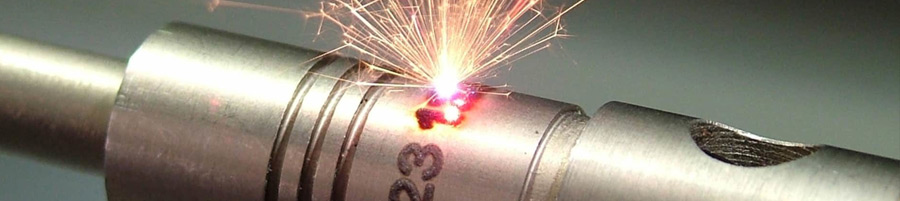
Laser part marking (also called laser engraving, laser etching, or laser marking) is one of the preferred and widely accepted direct part marking (DPM) methods under MIL-STD-130. It is explicitly recognized for producing durable, high-contrast, and permanent identifiers on a broad range of materials, including metals, alloys, plastics, and coated surfaces commonly used in aerospace, defense, and other military applications.
Key Advantages of Laser Marking for MIL-STD-130 Compliance
Laser marking excels in meeting the standard's core requirements for permanence, legibility, and environmental resistance:
- Permanence and Durability — The mark must survive the item's expected life, including environmental exposure, cleaning processes, abrasion, chemicals, and operational wear. Laser processes create marks by removing material, discoloring the surface through heat, or altering pigmentation — resulting in marks that are virtually indestructible on most substrates (often outperforming labels in harsh conditions).
- High Precision and Resolution — Capable of producing fine features needed for small Data Matrix ECC200 symbols (the preferred 2D symbology per ISO/IEC 15434 and MIL-STD-130 syntax/semantics), small human-readable text (minimum character height typically ~0.08 inches / 0.2 cm), and complex codes while maintaining readability.
- Non-Contact Process — Avoids mechanical stress or deformation of the part (unlike dot peening on thin or delicate components).
- Material Versatility — Effective on:
- Metals (aluminum, titanium, stainless steel, hardened steels > HRC 50)
- Coated or painted surfaces
- Some plastics (via pigmentation change or bonding)
- Contrast and Readability — Produces excellent contrast for both visual inspection and automated scanners, with verified grades of "B" or better required for Data Matrix symbols.
Common Laser Marking Variants Accepted Under MIL-STD-130
The standard (e.g., Table II in MIL-STD-130N) lists several laser-based techniques as suitable:
- Laser Ablation/Engraving — Removes a thin layer of material to create a recessed mark; excellent for metals and high-contrast needs.
- Laser Discoloration/Annealing — Uses heat to change surface color (often black or dark oxide on metals) without material removal; ideal for fine finishes or corrosion-resistant parts.
- Laser Paint Pigmentation — For plastics or coated surfaces where additives react to laser energy to produce color change.
- Laser Bonding — Bonds a marking medium to the surface for a raised mark in specific applications.
These methods are frequently selected for IUID-marked items (especially those ≥ $5,000 or mission-critical), where a permanent Data Matrix containing the Unique Item Identifier (UII), Enterprise Identifier (EID), part number, serial/lot number, etc., is required.
When Laser Marking Is Preferred
Laser part marking is particularly advantageous for:
- Aerospace and defense components exposed to extreme conditions
- High-hardness or precision parts where dot peening might cause stress risers
- Small or complex geometries requiring fine detail
- Applications needing both machine-readable MRI and crisp human-readable text
- Situations where labels or nameplates are impractical (e.g., curved surfaces, weight constraints, or long-term environmental exposure)
In summary, laser part marking is a highly reliable, DoD-approved technique that aligns closely with MIL-STD-130's goals of producing durable, verifiable, and traceable identification on military property. When implemented correctly — with proper symbol quality verification, mark location per the standard, and compliance with font/syntax rules — it provides one of the most robust solutions for meeting modern IUID and legacy identification requirements in defense manufacturing.
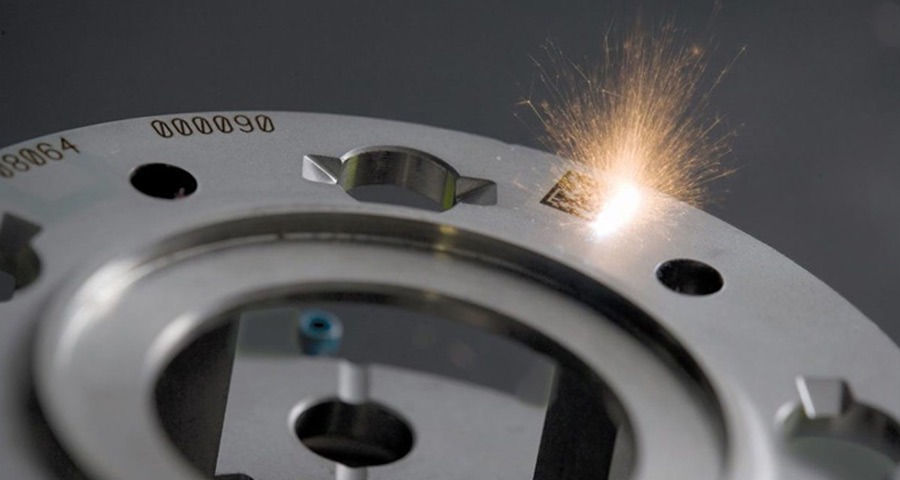
Laser part marking can be performed on functional parts per callouts via the designated engineering DWG, which note MIL-STD-130 as the method to be used for the part marking required.
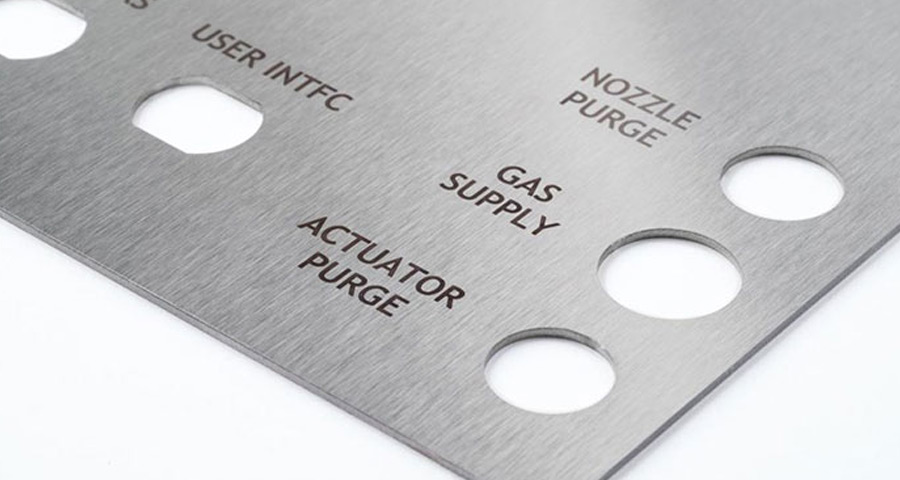
Laser part marking can be performed on various parts to assembly modules to flat panels.
HELPFUL LINKS __